Friday, November 30, 2012

Walkabout


Going on a walkabout through the Blue Mountains was a perfect way to start off my studies while in Australia. This tour led by Evan Yanna Muru, an aborigine, gave me great insight into what being an aborigine is all about. Interacting with Evan and his mellow tone, relaxed attitude, go-with-the-flow approach and take-things-as-they-come way helped me understand how he connects spiritually.  His way of life also keeps him very young mentally and physically.

What I was first surprised to hear from Evan was that only 200,000 aborigines are left in Australia and that the bloodline has become so diluted that many are white. There has not been a full-blooded aborigine for the last forty years found in Australia. He continued to explain to us that the color of one’s skin and one’s bloodline is not what aboriginal culture is about. Instead, it is about the way one leads their life and how spiritually connected they are to their land. According to the Australian government however, you must hold a certificate in order to consider yourself an aborigine. Also, the government categorizes aboriginal people by the languages they speak and the aboriginal nation they are a part of rather than their clan area. This is a good example of the modern world trying to order and complicate everything, versus a simple aboriginal lifestyle.


Evan was full of great advice that I will look back on throughout my life. He taught our group an abundance of spiritual and physical health tips. He had everyone laughing when he recommended we stick eucalyptus leaves up our nose. I must say the smell was exquisite and cleared my nasal passages right up! At the beginning of our walk, Evan told us about the importance of walking like the elders. Taking light steps and feeling every step of the earth not only helps one connect to nature and their spirit better, but it is also better for your body. He suggested that we all apply this to our lives in the modern world. For a while I was fairly certain he was about to make us all take off our shoes right then and there.


The aborigine group Evan is a part of believes that the spirit comes from the ground and enters every person between conception and birth. He explained to us the initiation process and how a walkabout applies to it.  He suggested that we connect to the dreaming world by leaving our thinking minds in the modern world and bringing all of our senses to our day on walkabout. We used our sense of touch to connect with nature by feeling the plants and rubbing the bark on trees as we hiked. My favorite tree was the river red gum tree, which has sticky red juice seeping from its bark that has antiseptic properties. I looked as if I was bleeding all over because I started rubbing so much of the red gum on my body. Evan also had us try chewing on many edible plants. I particularly enjoyed the Australian bush chewy that tasted like licorice.


When we stopped for lunch we painted leaves and rocks with mineral paint. I painted some leaves with historical symbols. The paints were made of mineral such as clay, charcoal, and iron. The simple and carefree lifestyle of Evan, our aboriginal leader, came through when I suggested we painted our faces instead of the rocks. Before I knew it Evan was creating a masterpiece, using my face as the canvas.


Evan showed our group many spiritual sites that showed the rainbow serpent and other historical images. He told us dreamtime stories that taught us about improving our wellbeing. This walkabout taught me that over thinking is a modern world application, which complicates our lives. On the other hand, feeling and connecting brings us positive energy that simplifies our lives.

As we got farther and farther into the bush I began to achieve a deeper understanding of the connection Evan spoke of and really enjoyed the walkabout, so much that I was really sad to go back to the hustle and bustle of the city. 

Wednesday, June 27, 2012

Gondola


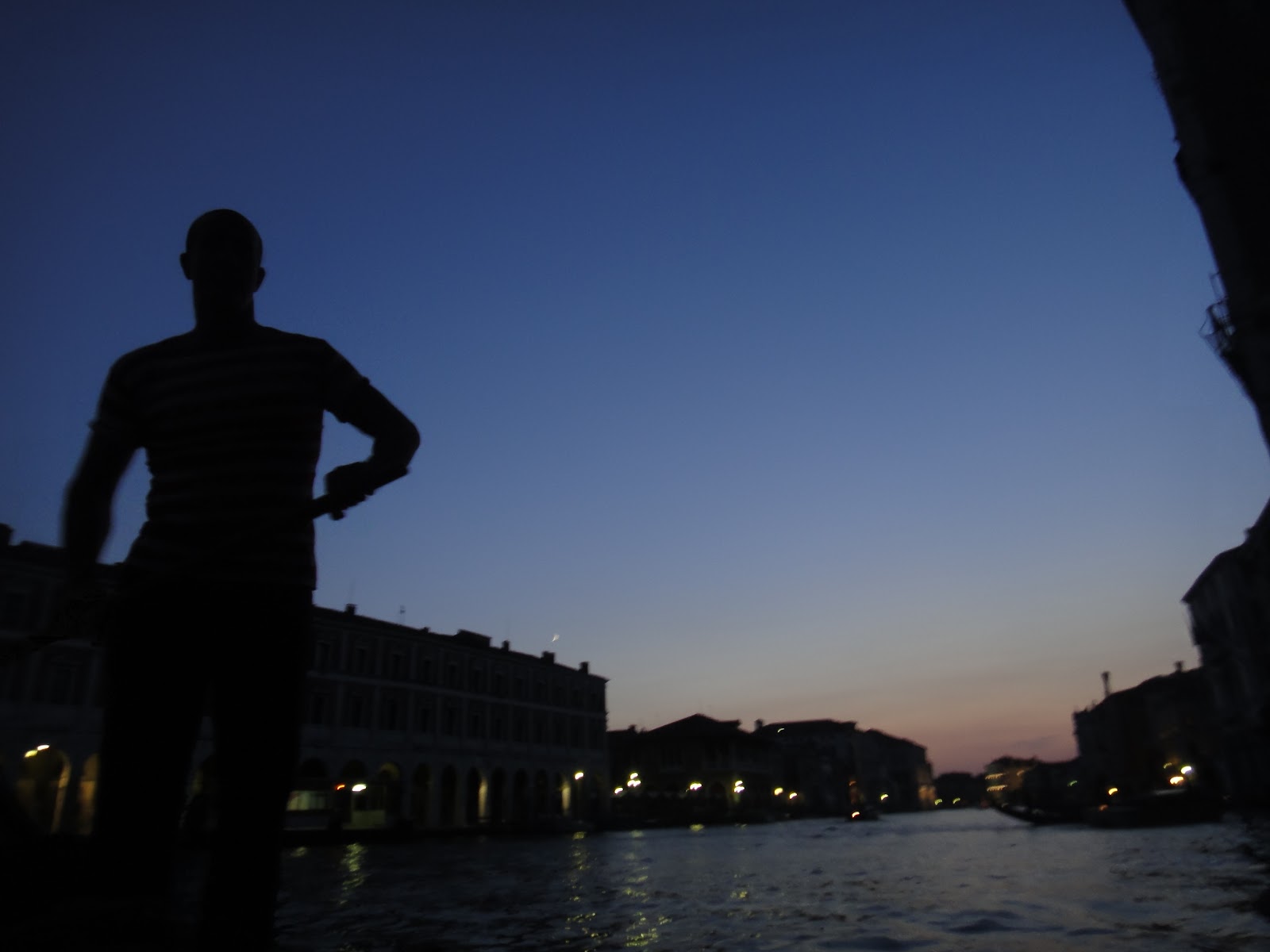
If there is one thing you ought to do while you’re in Venice, it’s to see the city from the water. It is truly amazing how everything we do using our cars, is done there with boats. For example, we saw boats as ambulances, trash pick-up, taxis, and as personal transportation. When you find a gondola at a gondola station you should ask your gondolier what he will show you and set a price before you get on so you do not get ripped off. The average cost of a short gondola ride is 100 Euros. There are 40 km of canals in Venice so if you want to see it all you’ll have to bring a sleeping bag and stay on for days!


When you are on your gondola tour you will get to sit and listen to your gondolier tell you about Venetian history as you relax through the many canals Venice has to offer.

Gondola Stations:
Danieli
Molo
Dogana
Bacino Orseolo
Trinita (Bauer)
Santa Maria del Giglio
San Toma
Riva del Carbon
Santa Sofia
Ferrovia/piazzale Roma

Piazza San Marco


Piazza San Marco has been the city center of Venice for hundreds of years. Built in the 9th century the square was built around St. Mark’s Basilica or the Basilica of San Marco. At the time, the Basilica was just a small chapel that was a part of Doge’s Palace. Within the square you will find the Basilica of San Marco, Doge’s Palace, a bell tower, two columns, a library and the first cafĂ© called the Florian. The square is used for religious and civil ceremonies. It is now the city’s main tourist attraction.


The Basilica of San Marco is a church done in Venetian-Byzantine style. The Basilica has its own bell tower, or campanile, which stands almost 100 meters tall. The square is also known for two columns that stand at the entrance to the square. They pay homage to two Venetian patrons, St. Mark and St. Teodoro of Amasea, as well as acting as the gateway into Venice.


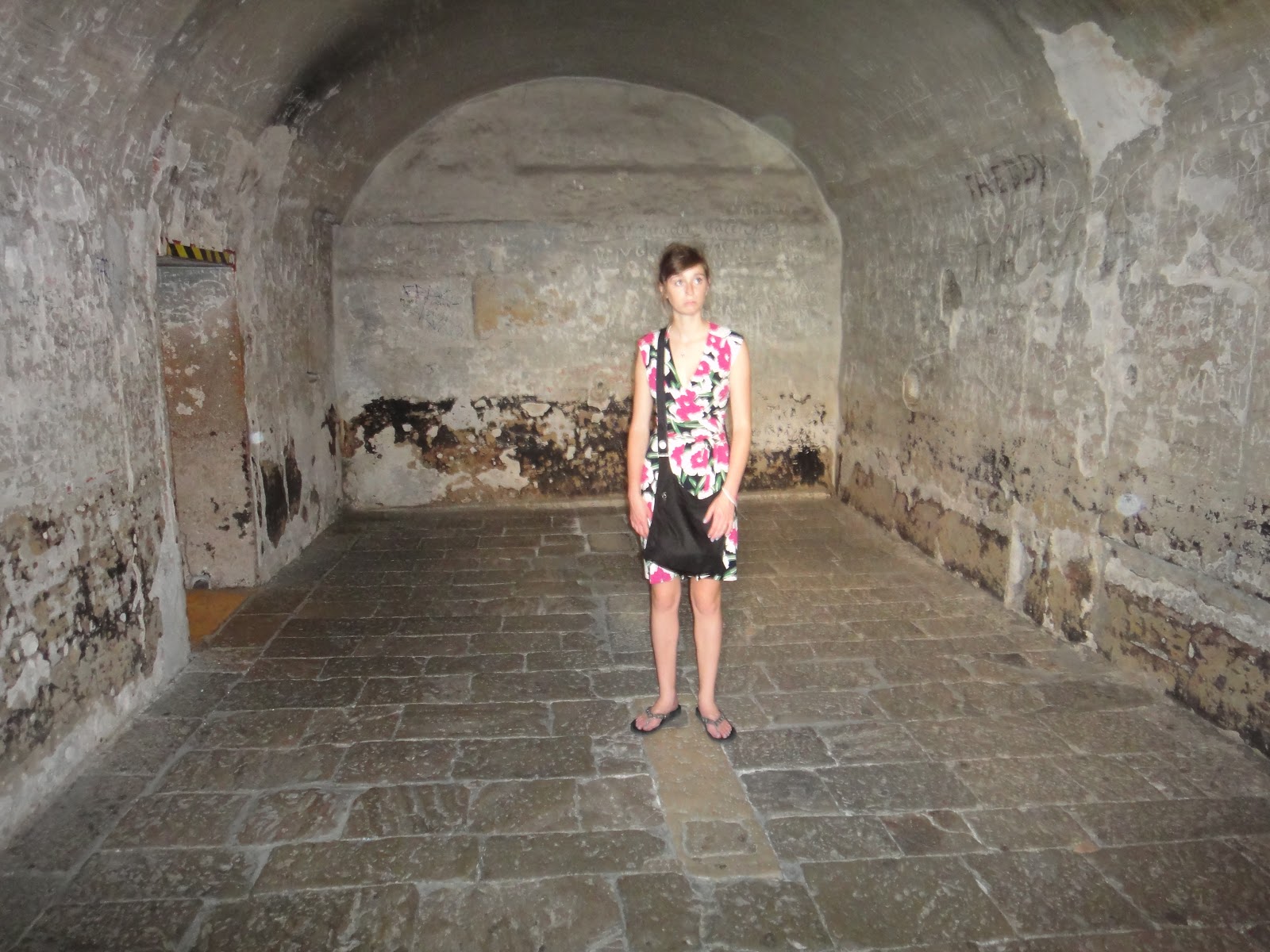
The Doge’s Palace is a gothic structure that faces the Venetian Lagoon. It was completed in the 1400’s. It is where the government has been placed for centuries, the palace of justice, as well as the home of the Doge, the elected ruler of the city. You can enter the Palace and tour it as a museum. You will see the chambers where prisoners were kept, the salons of the Doge, court rooms, and many weapons.

This is the Venetian version of a suggestion box. They are found around the Doge's Palace as a place for the bourgeois to write suggestions. As long as the notes were not anonymous they would be read.

Where you see two red columns, this is where criminals were executed.


Within the square you will not only see tons of tourists, but also tons of pigeons. You should know that Venice has passed a law that bans feeding the birds.

Saturday, June 23, 2012

“I Saw Venice”


As our wise gondolier said, “It is different to say I visited Venice, and I saw Venice. You must allow your self to get lost to really see the city.”  This is exactly what we did on accident upon arrival to Venice. After checking into Hotel Danieli, we got a map from the concierge with directions. After losing the map a half hour into our exploration, we chose to let ourselves create our way. We wandered over beautiful bridges and through fresh markets! We lunched at a small canal-side restaurant and then spent a good 2 hours “lost” until we found a ferry station. We hopped on the ferry, hoping it would take us to another stop where we could get a new ferry to head to Burano. To our surprise, the ferry stopped right in front of our hotel! So, my number one tip for Venice is: get Lost! It is much cooler to really see the city and get away from all the tourism!

Vaporetto


The ferry system is an easy and cheap way to get just about anywhere you want to go around Venice. Once you understand how the system works it is incredibly easy. What you should be warned of though is that they are not fast, and you should allow enough time to get from place to place. Also, we used the ferry system on the hottest day of the year, thus it was very hot and musky. It is 7 Euros for a one-hour pass or 20 Euros for a 24-hour pass, which seems to be the best route to take. You can also buy a 7-day pass for 50 Euros.


Here is a map to familiarize your self with the system:

Burano


One of the first sites we visited upon arrival was the island of Burano. When we reached the island, we were greeted with an array of lavishly colorful homes and buildings, parks and canals full of boats.


Burano is a very small island in the Venetian Lagoon. It is known for its colorful homes. In Burano, you will also see the leaning campanile, which is the bell tower at the church of San Martino. You can also visit the Lace Museum, although we did not do this. Lace is one of the things the island is famous for.


My sisters and I had a great time walking through side streets and photographing all the beauty. We also enjoyed strolling through the main street with various shops and eateries. We especially loved getting scoops of gelato to cool us down in the heat.


Compared to the tourist filled streets of Venice, the island of Burano was very lovely and refreshing.


What you should know about getting to Burano is that it will take up a large chunk of your afternoon if you don’t know what you’re doing. We traveled to Burano via Vaporetto (a ferry). Depending on where you start, it could take a few ferry switches. We spent about 4 hours in various ferries to get to and from Burano, as we were very confused to start, but it was well worth it! The ferry that will take you to Burano is Vaporetto #12, so hop on that one when you see it!

Hotel Danieli


Have you ever hoped to stand in the same spot as Angelina Jolie or Johnny Depp? Or maybe you want to see the hotel where “The Tourist” was filmed? Well, right next to Saint Marcos square you will find Hotel Danieli. This is where we stayed and I can say that this hotel is nothing short of beautiful. An ex-palace, Hotel Danieli is unlike anywhere else I’ve been.


If you choose to stay here, be sure to have breakfast on the roof deck. From up here you have an incredible view of the Venetian Lagoon and surrounding sites.


We could look out at all of this while we ate!


Also, check out the view from our window!